

Moving from trend to infrastructure: Kevin Wright explores HBOT governance, the 2.0 ATA magnitude gap, and strategic clinical sovereignty.
Moving from Hyperbaric Trend to Healthcare Infrastructure
Hyperbaric Oxygen Therapy (HBOT) is entering a structural transition.
For more than six decades, it established credibility within tightly governed clinical environments. Over the past five years, it has expanded rapidly into performance centres, longevity clinics, and hybrid medical settings. The result is a widening competence gap: hardware adoption has accelerated faster than governance maturity.
The next phase of the sector will not be defined by how many chambers are installed, but by how rigorously oxygen dose, pressure magnitude, and regulatory boundaries are understood and applied.
The mechanism is established. The magnitude is measurable.The differentiator is governance.
From Intervention to Infrastructure
In earlier analysis, we explored why HBOT is positioned to influence modern recovery and resilience science. That case remains compelling. The underlying physiology is well characterised, and the evidence base continues to expand.
Yet a modality does not mature when its mechanism is validated. It matures when its delivery becomes systematised.
Healthcare infrastructure is not defined by innovation alone. It is defined by reproducibility, clarity of scope, and institutional confidence. It requires disciplined operating standards and a shared understanding of risk and magnitude.
HBOT is now transitioning from being viewed as a specialised intervention to being treated as part of a broader recovery and longevity infrastructure. That transition demands a shift in mindset, from acquiring equipment to engineering a service model.
Without that shift, growth remains unstable.

The Physics Beneath the Promise
At its core, hyperbaric oxygen therapy is governed by simple physical principles. Increase ambient pressure while breathing high-concentration oxygen and the partial pressure of oxygen rises. As it rises, more oxygen dissolves directly into plasma, supplementing haemoglobin-bound oxygen.
This is not speculative. It is dose-response physiology. At approximately 1.5 ATA, plasma oxygen increases to roughly three times sea-level levels. At 2.0 ATA, it rises to roughly five times sea-level levels. The mechanism is identical in both cases.
The difference is magnitude.That magnitude differential, approximately 35–40% between 1.5 and 2.0 ATA , is not cosmetic. It meaningfully alters diffusion gradients, tissue oxygen availability, and the intensity of physiological stimulus.
In hospital environments, this magnitude has long been treated with respect. In emerging performance and longevity settings, it is sometimes treated as a feature comparison. Pressure, however, is not a specification. It is a dosing variable. The maturation of the sector will depend on whether magnitude is understood not simply as “higher or lower,” but as a calibrated physiological input aligned with a defined objective.
An Expanding Evidence Arc
Formal medical indications for HBOT remain clearly defined. Yet the broader literature now demonstrates systemic influence across multiple biological domains: microvascular perfusion, inflammatory signalling, angiogenesis, and mitochondrial energetics.
These mechanisms underpin established medical practice. They also create plausible translational pathways into areas such as neurocognitive resilience, metabolic optimisation, and structured recovery science. The expansion of interest is therefore not irrational. It is biologically coherent. However, as the evidence arc widens, so too must operator and clinician literacy. Mechanism without context invites overreach. Enthusiasm without boundary invites correction.
Maturity requires the simultaneous understanding of mechanism, magnitude, and limitation.
Regulatory Clarity as Strategic Asset
Rapid expansion inevitably introduces ambiguity. In the UK and EU, hyperbaric systems fall broadly within two regulatory domains: non-medical pressurised systems governed by the Simple Pressure Vessel Directive, and medical devices regulated under the Medical Device Regulation (MDR).
The frameworks are defined. The confusion lies not in absence of regulation, but in inconsistent interpretation. When marketing language drifts beyond classification, risk accumulates. When documentation is inconsistent, exposure increases. When pressure selection lacks transparent rationale, defensibility weakens.
As insurance scrutiny intensifies and regulatory interpretation tightens, clarity will become a competitive advantage. Organisations that embed documentation discipline and boundary precision today will operate with insulation tomorrow. In this context, governance is not restrictive. It is protective.
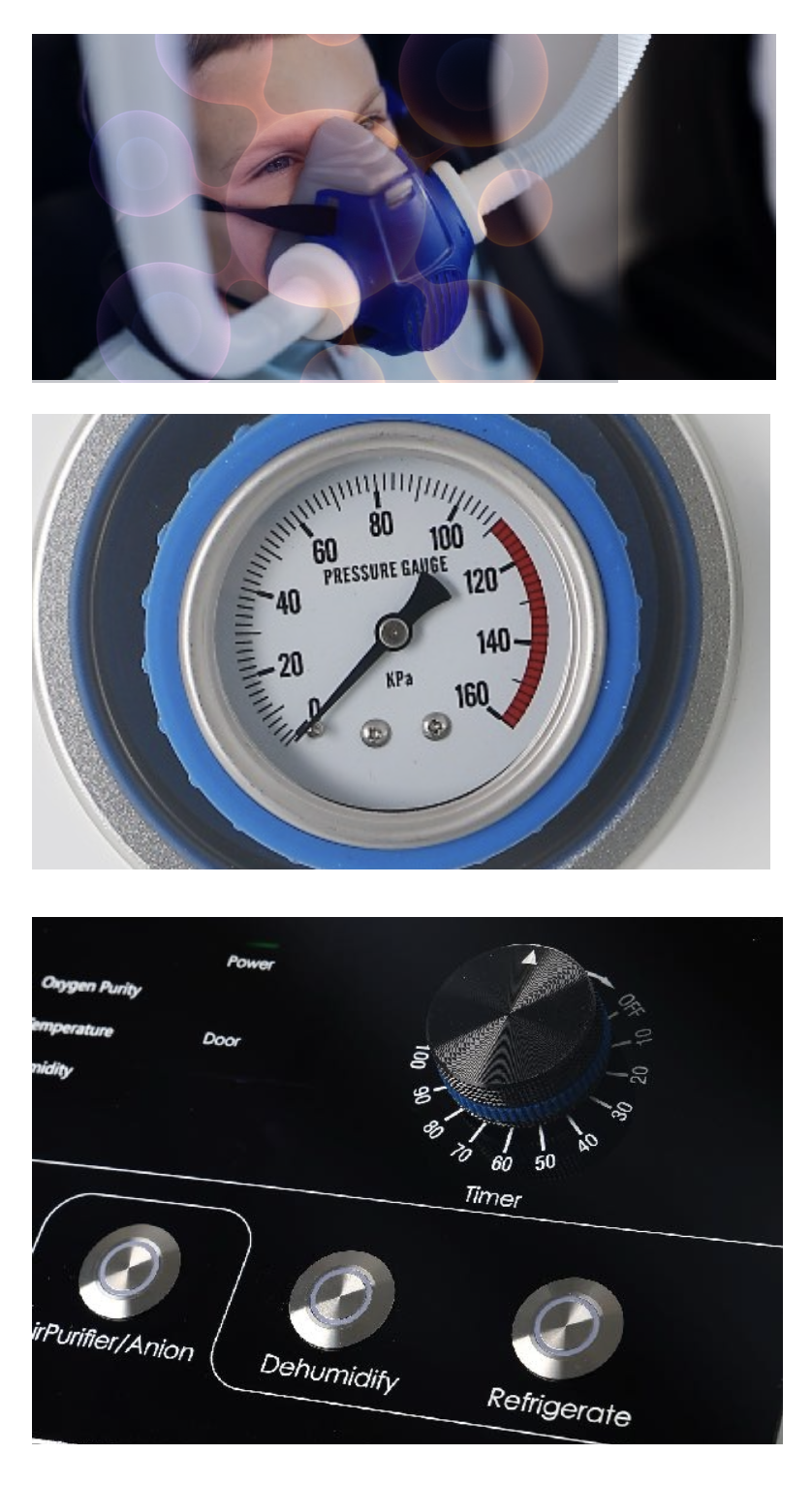
From Adoption to Accountability
Every emerging modality passes through predictable stages: innovation, expansion, noise, standardisation, institutional trust.
HBOT sits between expansion and standardisation.
The technology itself is not unstable. The instability lies in uneven competence across operators and environments.
True infrastructure requires five elements working in concert: evidence literacy, dose transparency, regulatory clarity, structured safety culture, and a clear separation between optimisation practice and medical treatment.
When these pillars align, institutional trust compounds. When they do not, consolidation and correction follow.
The sector now stands at an inflection point. The choice is not between growth and restraint. It is between disciplined growth and volatile growth.
The Competitive Advantage of Stewardship
For operators, this means pressure selection must be protocol-driven rather than marketing-driven. Documentation must anticipate scrutiny rather than react to it. Client education must clarify magnitude, limits, and intent.
For clinicians, HBOT must be integrated as a dosing tool within a broader therapeutic framework. Magnitude differentials must inform prescription decisions. Translational research must be applied with discipline rather than extrapolation.
For both, professionalisation is no longer optional. It is strategic insulation. Infrastructure endures. Trends do not.
Conclusion: The Maturity Threshold
HBOT does not require reinvention. Its physiology is established. Its magnitude differentials are measurable. Its regulatory architecture is defined. What remains variable is governance.
The conversation must now shift from “Why oxygen?” to “How precisely, safely, and defensibly do we deliver it?”
The organisations that operationalise oxygen with clarity and restraint will define the sector’s credibility for the next decade.
The era of acquisition is closing.
The era of accountability has begun.
About the Author
Kevin Wright is Co-Founder of Beyond the Norm. A former Royal Navy Saturation and Clearance Diving Officer and Operations and Training Training Officer at the US Navy Experimental Diving Unit (NEDU), he brings over two decades of high-consequence hyperbaric operational experience to the UK sector.